
February 14, 2025What is Biophilic Design
Biophilic Design:A history. Biophilia literally translated from the Greek means “love of life”. It was coined by phychologist Erich Gramm and in the 1980s was adopted by Biologist Edward O’Wilson. It summarised the need for Humans to be connected to other forms of life.
“Nature holds the key to our aesthetic, intellectual, cognitive and even spiritual satisfaction." (Edward O’Wilson, Biophilia:1984)
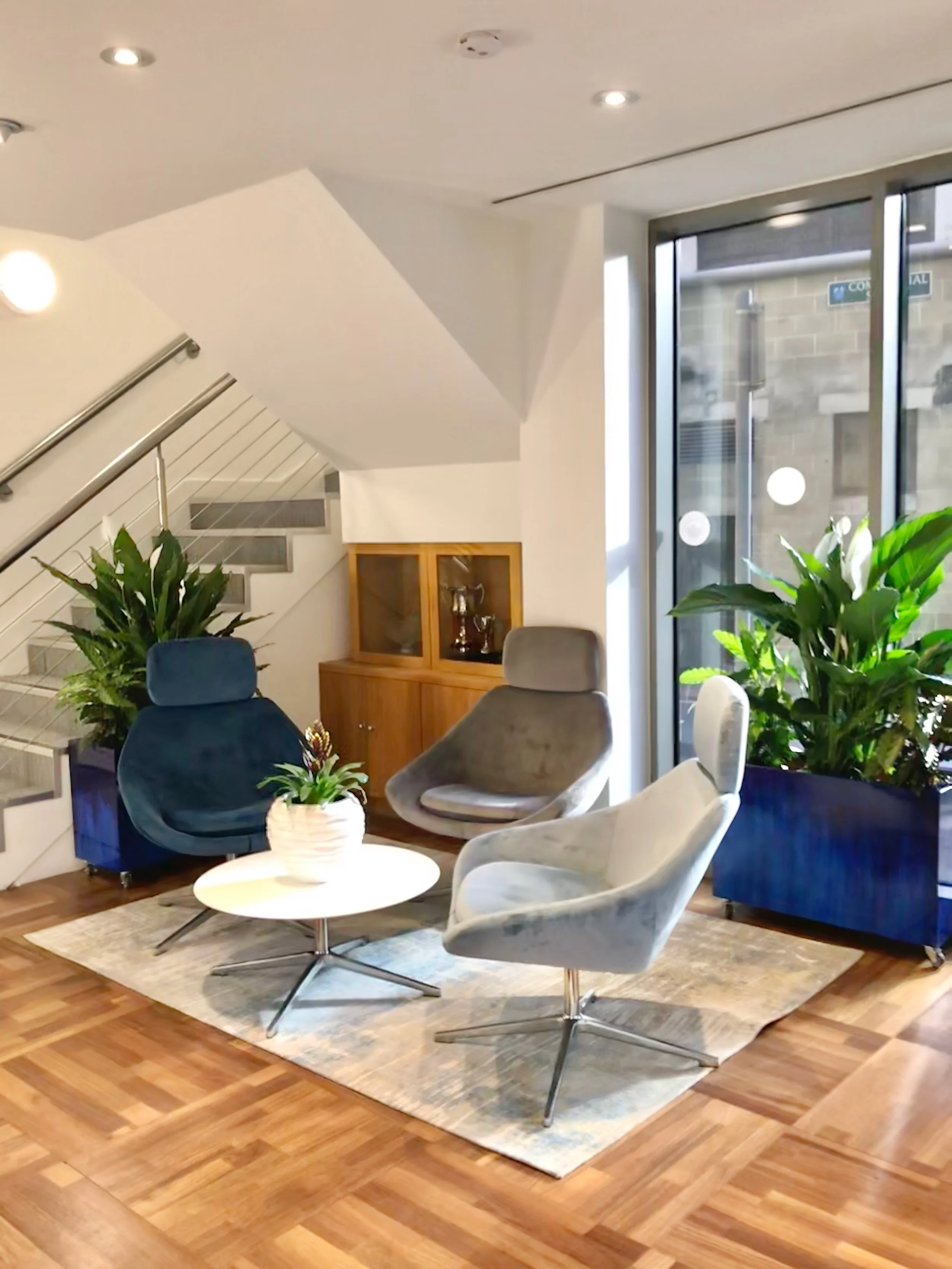
Today Biophilic Design refers to architecture, urban planning & interior design acknowledging and incorporating elements that either reflect the natural environment or bring it into the spaces which we live in day to day.
The Benefits: The list of benefits is long and includes many studies, proving how designing our built world to incorporate elements from nature can have many positive effects.
Mental wellbeing - Plants reduce stress through a combination of physical, neurological, and psychological changes in the human body. A University of Hyogo study of 63 office workers found that taking three-minute breaks to look at a small desk plant significantly lowered anxiety scores and pulse rates.
Visual Calmness: Looking at soft, rounded green leaves and natural canopies signals safety to the brain and elicits positive, relaxing emotions.
Physical wellbeing - Obviously reducing stress has its physical benefits, but the humidity around plants also helps reduce the occurrence of dry eyes and throat which are common among office workers especially in the winter. Many of the commonly used office plants help to clean the air, absorbing VOCs (Volatile Organic compounds) and reducing Co2. Also to some extent plants can reduce background noise, this improves the working environment.
Aesthetics - Plants in an office soften hard architectural lines, break up monotonous desks and screens, and introduce natural texture and movement. Plants can be used to create subtle dividers in open plan office spaces give a sense of privacy when used to screen areas of the workplace.
Plants can be used to fill large blank walls whether this is a moss wall, plant wall or a large potted plant.
The containers that plants are potted up in can also add interest, texture and colour.

This itinerary embodies our expertise, aligning each session with measurable outcomes that optimize engagement, facilitate collaboration, and sustain momentum for continuous improvement.
Day OneOrientation and Goal Setting
We establish shared objectives, outline solutions, and set performance metrics that frame the comprehensive experience ahead.
Check-In9:00 – 9:30am
Group Activity11:00am
Lunch Break12:30pm
Creative Workshop2:00pm
Dinner6:30pm

Day TwoCore Skills Workshop
We implement interactive modules that demonstrate essential techniques, optimize retention, and embed practical competences through guided practice.
Check-In9:00 – 9:30am
Group Activity11:00am
Lunch Break12:30pm
Creative Workshop2:00pm
Dinner6:30pm
Day TwoCore Skills Workshop
Industry leaders present emerging trends, facilitating critical discourse on future challenges and collaborative opportunities.
Check-In9:00 – 9:30am
Group Activity11:00am
Lunch Break12:30pm
Creative Workshop2:00pm
Dinner6:30pm
Our methodology unites scientific instructional design with operational precision, delivering measurable return on participation.-
Pre-event diagnostics determine baseline competencies, aligning content with identified gaps.
-
Module sequencing flexes to varying time horizons and sector requirements.
-
Internal audits examine pedagogical coherence and logistical efficiency.
-
Single-sign-on access streamlines user experience across devices.
-
Multimodal content accommodates visual, auditory, and kinesthetic preferences.