
What is Biophilic Design?
Biophilic Design: A history. Biophilia literally translated from the Greek means “love of life”. It was coined by phychologist Erich Gramm and in the 1980s was adopted by Biologist Edward O’Wilson. It summarised the need for Humans to be connected to other forms of life.
“Nature holds the key to our aesthetic, intellectual, cognitive and even spiritual satisfaction." (Edward O’Wilson, Biophilia:1984)
Today Biophilic Design refers to architecture, urban planning & interior design acknowledging and incorporating elements that either reflect the natural environment or bring it into the spaces which we live in day to day.
Why Plants?
The Benefits: The list of benefits is long and includes many studies, proving how designing our built world to incorporate elements from nature can have many positive effects.
Mental wellbeing - Plants reduce stress through a combination of physical, neurological, and psychological changes in the human body. A University of Hyogo study of 63 office workers found that taking three-minute breaks to look at a small desk plant significantly lowered anxiety scores and pulse rates.
Visual Calmness: Looking at soft, rounded green leaves and natural canopies signals safety to the brain and elicits positive, relaxing emotions.
Physical wellbeing - Reducing stress has its physical benefits, but the humidity around plants also helps reduce the occurrence of dry eyes and throat which are common among office workers especially in the winter. Many of the commonly used office plants help to clean the air, absorbing VOCs (Volatile Organic compounds) and reducing Co2. Also to some extent plants can reduce background noise, this improves the working environment.
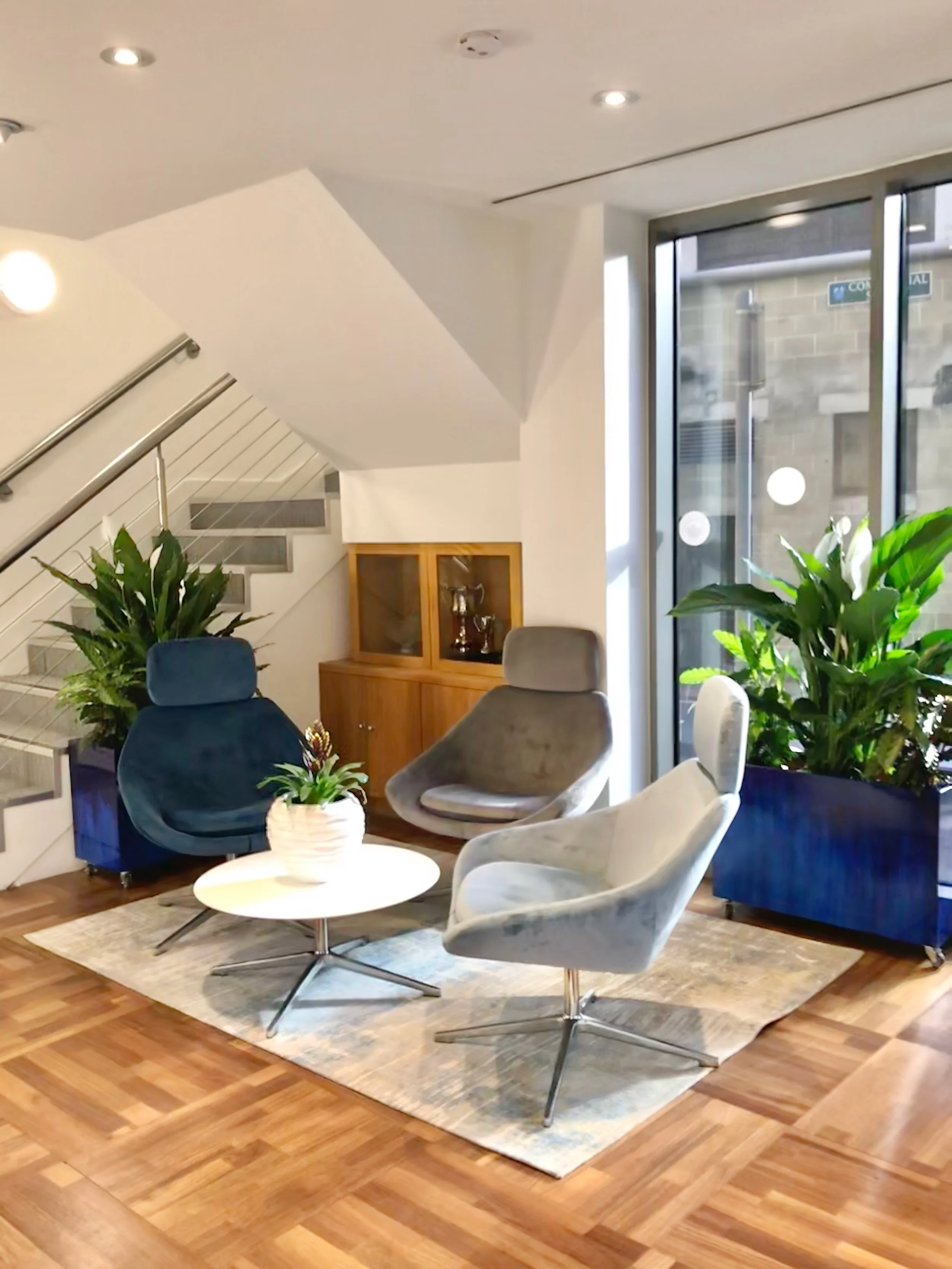
Aesthetics - Plants in an office soften hard architectural lines, break up monotonous desks and screens, and introduce natural texture and movement. Plants can be used to create subtle dividers in open plan office spaces give a sense of privacy when used to screen areas of the workplace.
Plants can be used to fill large blank walls whether this is a moss wall, plant wall or a large potted plant.
The containers that plants are potted up in can also add interest, texture and colour.